I.
Reliance Mapper
See exactly how each vendor connects to business processes, decision workflows, internal controls, downstream systems, teams, findings, and remediation. An “If vendor unavailable” impact summary turns vendor governance into dependency governance.
II.
Pre-Renewal Governance Review Pack
Generate a governance-focused dossier for any upcoming renewal: trust/risk trend, incidents, SLA performance, evidence completeness, open signals, fallback status, concentration exposure, contract mismatch history, and a recommended governance posture.
III.
Shared Dependency Blast Radius
Turn concentration risk into an actionable exposure model. See what happens when a shared upstream dependency fails — which vendors, processes, controls, and teams are exposed — with “if unavailable / degraded / contract changes / logging lost” scenario previews.
IV.
Exit Readiness Simulator
Model whether the institution can continue operating if a vendor degrades, fails, or must be exited. Readiness status (ready / partially ready / fragile / not ready) across outage, gradual degradation, forced exit, logging loss, and data-portability scenarios.
V.
Human Override & Vendor Friction Analytics
Treat repeated override, manual correction, workaround, and escalation as a governance signal. Spot silent operational distrust before it becomes an incident. Friction trends correlate to incidents and SLA performance.
VI.
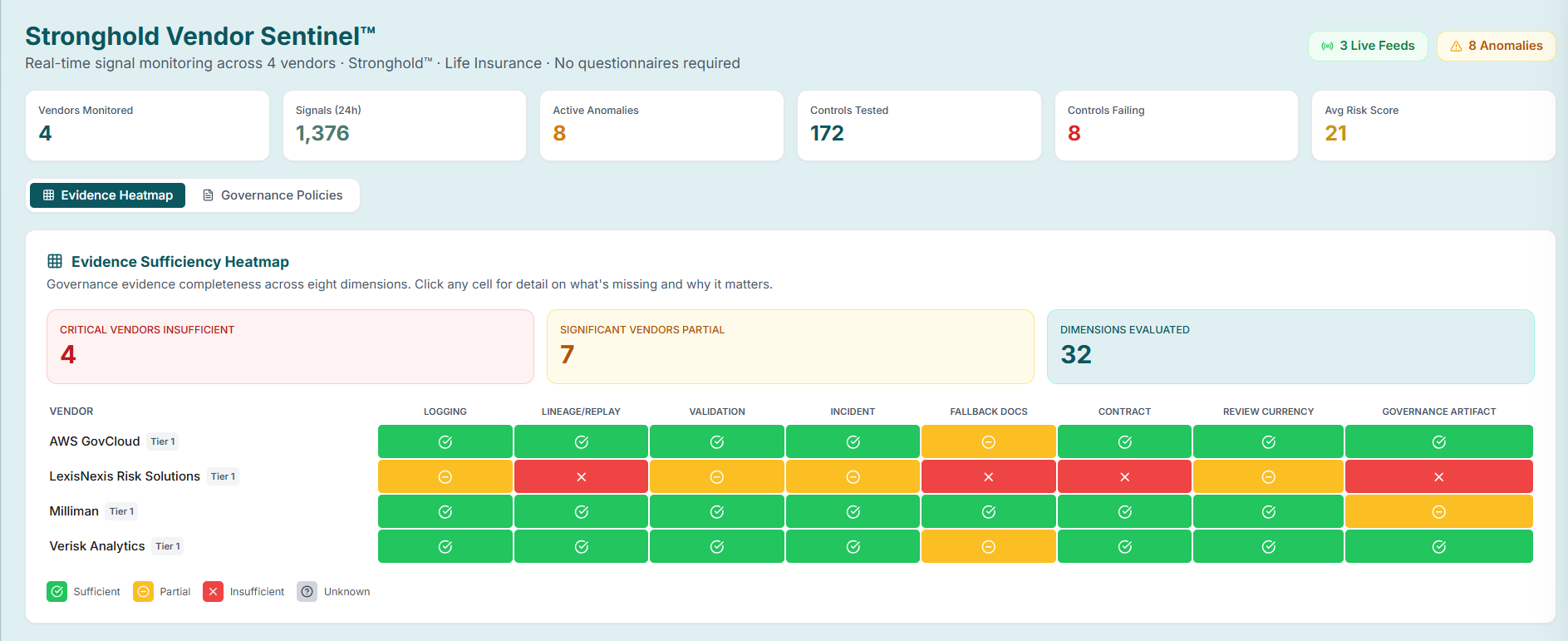
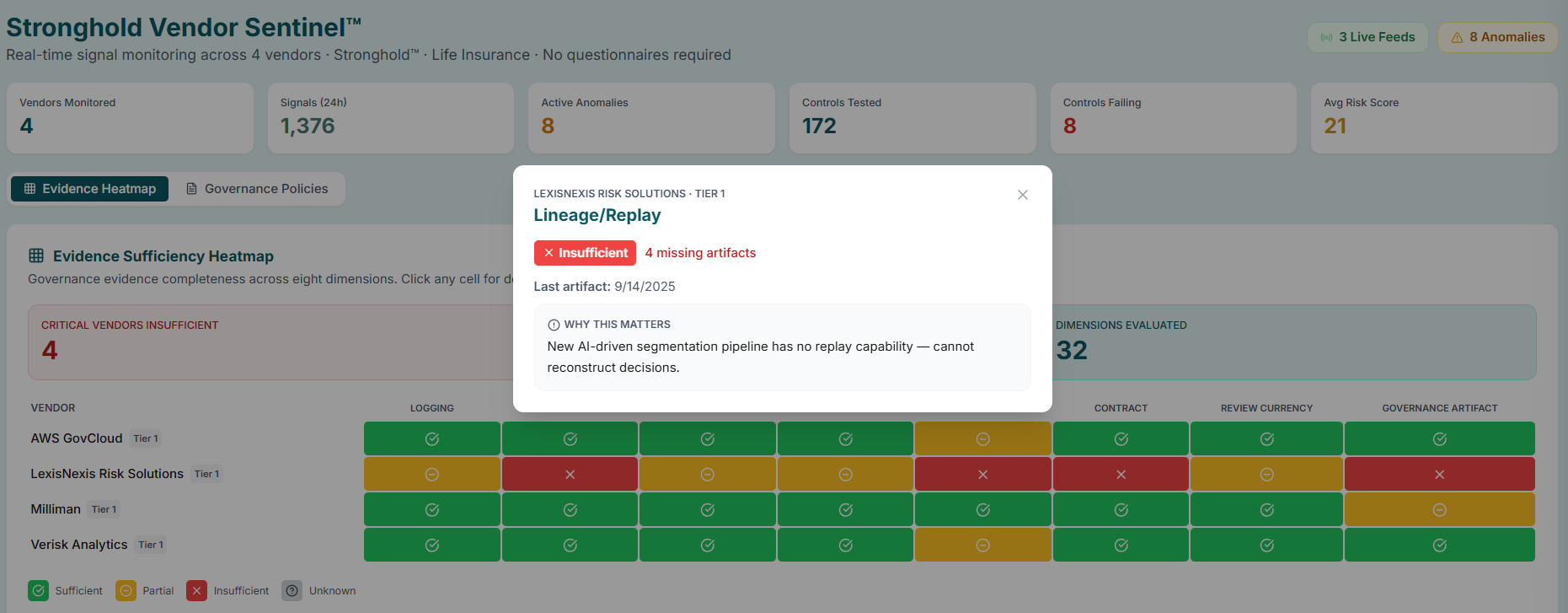
Evidence Sufficiency Heatmap
A board-friendly picture of whether each vendor has sufficient governance evidence: logging, lineage/replay, validation, incidents, fallback, contract completeness, review currency. Each cell drills to what is missing and why it matters.
VII.
Vendor Change Watchtower
A timeline of material vendor changes — releases, model/version changes, subprocessor changes, contract/DPA changes, SLA incidents, security notices, support path changes. Unreviewed material changes are flagged until governance catches up.
 Premium Module · Stand-alone capable